At the Minnesota Literacy Council, we recently launched a new website http://www.mnliteracy.org/, and we've moved the blog to this new site!
We also have a new name. Formerly the Adult Literacy Volunteer blog, this blog is now called "Volunteer Voice."
Check us out at www.mnliteracy.org/volunteers/blog!
Sincerely,
Tricia & literacy council staff
Monday, December 19, 2011

Monday, December 5, 2011
MLC Volunteer Book Club Meeting - December 13 - Zeitoun

Do you like to read and talk about books? The MLC Volunteer Book Club is led by and for the volunteers who attend and meets approximately every three months at MLC's main office. All volunteers, program staff and those interested in literacy are invited to join us. This quarter the members have chosen to discuss Zeitoun by Dave Eggers.
When: Tuesday, December 13, from 6:30 - 7:30 pm
Where: Minnesota Literacy Council's main office
700 Raymond Ave, Ste. 180, St. Paul 55114 see map
Questions? Contact Allison at arunchey@themlc.org or
Tricia at tbrooks@themlc.org.Please RSVP to arunchey@themlc.org.
Movie Night at MLC

Volunteers and those interested in literacy are invited to watch the documentary How Do You Spell Murder? This film explores the powerful connection between illiteracy and crime. “America's prisons are full of men and women who come from deteriorating urban neighborhoods with failing public school systems. Almost three-fourths of those incarcerated have not graduated from high school and a staggering 70 percent are functionally illiterate and read below a fourth grade level.” (from the film’s website)
How Do You Spell Murder? was filmed at New Jersey State Prison and “spotlights a flourishing inmate-run literacy program called L.I.F.E. – Learning Is For Everyone” (Impact Publications). It will be followed by a discussion facilitated by Abby Roza from Hennepin County’s Adult Correctional Facility in Plymouth. This film contains some explicit language.When: Wednesday, December 14, from 6:30 – 8:00 pm
Where: 700 Raymond Ave. Suite 180, St. Paul (see map)
Cost: Free
Please RSVP to arunchey@themlc.org with the number of persons in your party. Friends and family are welcome to attend.
Hope to see you there!
December Literacy Leader - Joe Halvorson
 After teaching English in China for a year, and really enjoying it, Joe Halvorson came back to Minnesota determined to help with literacy in his community. He is now a two-year volunteer at the Minnesota Literacy Council, tutoring mostly Computer Literacy classes at MLC Learning Center -Lake Street.
Joe understands that the digital world’s peculiar language and culture can be extremely daunting to newcomers. “People who grew up around computers take those skills for granted,” he says. “Using a keyboard and mouse is by no means instinctive – it takes a lot of practice and patience on the part of new learners.” Joe matches this practice and patience every Monday night.
Bailey Craft, ESL Teacher and Evening Volunteer Coordinator at Lake Street, has high praise for Joe’s style of instruction and level of engagement. “Joe is a patient and caring teacher,” she remarks. “He’s super invested in those he teaches, and students comment to me about his clear, accessible teaching style. When unexpected obstacles arise in class, Joe is pragmatic, thoughtful and calm.”
When asked how volunteering with adult literacy has impacted him, Joe cites, for one, an increase in his public-speaking skills. “Communicating complex tasks to beginners is a challenge,” he says. “You have to put yourself in their shoes and figure out the simplest and best explanation.” He also enjoys being “in touch with people from different cultures and backgrounds.”
The best thing about volunteering, though? Seeing progress in action. Although Joe will be leaving at the end of this year – and will be dearly missed by many – his legacy leaves a line of digitally self-empowered people, who now have access to countless opportunities, a giant boon to individual and community alike. “Computer literacy is a 21st century survival skill,” Joe asserts. “If you want to find out about school closures, keep up with events in the community, or stay competitive in the job market it is increasingly necessary to know how to use a computer.”
Thank you, Joe, for sharing and helping to articulate MLC’s vision. Your skill, dedication and compassion are deeply appreciated. You truly are a leader in literacy.
Joe Halvorson attended a MLC training, earned his tutor certificate and started changing people’s lives. He does it for a few hours a week. If you would like to volunteer with adult literacy—or with computer literacy—simply follow the links or email your questions to volunteer@themlc.org.
Saturday, October 22, 2011
Another Success
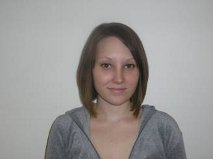 The most recent Lake Street Center GED graduate, Chelsey Hicks, shared some observations with us now that she has completed her GED classes and all of her tests.
Chelsey was born in Tennessee but grew up mostly in Florida. She said that she didn’t like her high school very much, and that once she began seeking her GED she had some negative experiences with other programs. Until she came to the MLC Lake Street Learning Center, she felt pushed aside and unheard. She feels that the Lake Street Center has a very comfortable environment, better than any other place she has tried. At Lake Street, Chelsey has felt that she is a member of a team, that everyone is working together toward a goal, and that you can ask any questions you need to ask, they will always be answered.
While studying for her GED at Lake Street, Chelsey learned that she was good at taking tests and that she was smart. She was especially happy to get an educational assessment.
Chelsey advises other GED students to always come to class, even though there are days that you won’t feel like it. She also suggests that people make time after class to study. Lastly, she urges others to at least try for the GED scholarship. This was not something that she came in expecting to get, but she found it really useful, and gratifying to have received it without consciously trying for it.
Now that Chelsey has met this major goal, her plans are to continue her education. She has many more options now than she had before, and although she isn’t sure what she will study yet, she knows that now is no time to stop!
~Carol Wahl, GED Intern, Lake Street
The Minnesota Literacy Council is deeply committed to the success of students like Chelsey. If you would like to get involved with a similar program, opportunities abound. Several learning sites throughout the metro area are in need of GED tutors, including two on Franklin Avenue, one on Hennepin, two on Lake Street and more. Visit themlc.org to learn more about locations and other volunteer positions. Or email your questions to volunteer@themlc.org.
Call for Community Tech Tutors
 |
| From Bing Images |
As a community technology tutor, you’ll introduce new pupils to the basic styles and techniques of digital literacy: the potent way of the web-browser, the elegant power of broadband technology, the deadly speed of email, the furious efficiency and deep mysteries of word-processing software, and much more. With your help, students will leave our program well-prepared to journey into the world wide web, using search engines, creating resumes and filling out online job applications with decisive, foe-crushing force.
There are many who lack the essential knowledge and skills to utilize new technologies. Your tutelage can make all the difference.
I go in peace.
Not a techie? Find other ways to volunteer with adult literacy. To learn more, follow the links or send your questions to volunteer@themlc.org.
Monday, October 10, 2011
October's Literacy Leader:
Elizabeth Burns
- Hubbs Center, St. Paul
 Many adults in America experience the challenges of learning a new language and adjusting to a new culture, which can be extremely difficult - and terrifying. That’s why we’re lucky to have people like Elizabeth Burns, who volunteer and work to lessen those challenges and to quell some of the fears associated with them.
Last year, Elizabeth volunteered in Mary Pat’s ELL class. Mary Pat says, “[Elizabeth] enters our classroom with her charming smile and amazing personality, and the heart of every learner in the room is captivated…she has a unique, humorous, yet quiet style that promotes others to listen to her ideas and wisdom.” With such a dynamic teaching assistant, it’s little wonder that over the past months, dozens of learners in her classes have shown marked improvements in attendance, attention to work, and test scores.
In a typical evening, Elizabeth meets with the teacher before class to discuss and review the lesson plan. She greets students as they filter in. Conversations are struck, jokes told, and while everyone catches up on each other’s dealings and current events, Elizabeth edges the discussion into alignment with the lesson plan. After that, she circulates the classroom, answering questions and helping students individually as needed.
When we asked Elizabeth what she likes best about her volunteer work, she emphasized the relationships she’s built with learners and the joy she gets from their successes. She says, “I love coming in week after week and being able to tell that they have learned something and have effectively used their new conversation skills or interview skills.”
An exemplary adult literacy volunteer, Elizabeth has earned the respect and admiration of the students she serves and has inspired those she works with. “We all have an impact on each other’s lives,” she says. “I am so glad to be a part of their journey here at Hubbs.”
- Hubbs Center, St. Paul
 Many adults in America experience the challenges of learning a new language and adjusting to a new culture, which can be extremely difficult - and terrifying. That’s why we’re lucky to have people like Elizabeth Burns, who volunteer and work to lessen those challenges and to quell some of the fears associated with them.
 Elizabeth came to St. Paul’s Hubbs Center after meeting Ruth Rodriguez, the Hubbs Center’s volunteer coordinator, at a University of Minnesota volunteer fair. Over the past two years, she’s had amazing success as a volunteer classroom assistant. As a result of Elizabeth's excellent volunteer experience, she was offered a work-study position at the Hubbs Center (an off-campus work-study site through the University of Minnesota). Through her volunteering, she has been able to grow, take on new responsibilities, and help support her own educational goals, as well.
Last year, Elizabeth volunteered in Mary Pat’s ELL class. Mary Pat says, “[Elizabeth] enters our classroom with her charming smile and amazing personality, and the heart of every learner in the room is captivated…she has a unique, humorous, yet quiet style that promotes others to listen to her ideas and wisdom.” With such a dynamic teaching assistant, it’s little wonder that over the past months, dozens of learners in her classes have shown marked improvements in attendance, attention to work, and test scores.
In a typical evening, Elizabeth meets with the teacher before class to discuss and review the lesson plan. She greets students as they filter in. Conversations are struck, jokes told, and while everyone catches up on each other’s dealings and current events, Elizabeth edges the discussion into alignment with the lesson plan. After that, she circulates the classroom, answering questions and helping students individually as needed.
When we asked Elizabeth what she likes best about her volunteer work, she emphasized the relationships she’s built with learners and the joy she gets from their successes. She says, “I love coming in week after week and being able to tell that they have learned something and have effectively used their new conversation skills or interview skills.”
An exemplary adult literacy volunteer, Elizabeth has earned the respect and admiration of the students she serves and has inspired those she works with. “We all have an impact on each other’s lives,” she says. “I am so glad to be a part of their journey here at Hubbs.”
Subscribe to:
Posts (Atom)